

Let the Body Choose
Written by: Staff Therapist Amerah Muhammad, MHC-LP

Sometimes, our logical minds lead us astray. When facing crossroads, we tend to overanalyze the logistical “who, what, where, when and why,”of a situation. While analysis is valuable, we’re rarely taught to honor the intelligence stored within our own bodies.Modern life is designed for convenience and speed. Simple examples of this are phones for communication, tractors for farming, and utensils for eating. While these tools offer ease, they also function as a sensory buffer, distancing and detaching us from our natural capacity for the present moment. To bypass this noise, we must cultivate solitude, creating the space necessary to detect subtle physiological signs meant to guide our alignment. When challenging choices arise, try temporarily setting aside the reasoning mind and abandon the cycle of obsessive thought. This does not mean allowing reactive emotions to take over but rather a call for a deeper, somatic intuitiveness to lead the way. By refining your interoceptive awareness, you begin to unlock a form of visceral knowledge. This is the type of embodied insight that AI will never be able to replace or replicate.
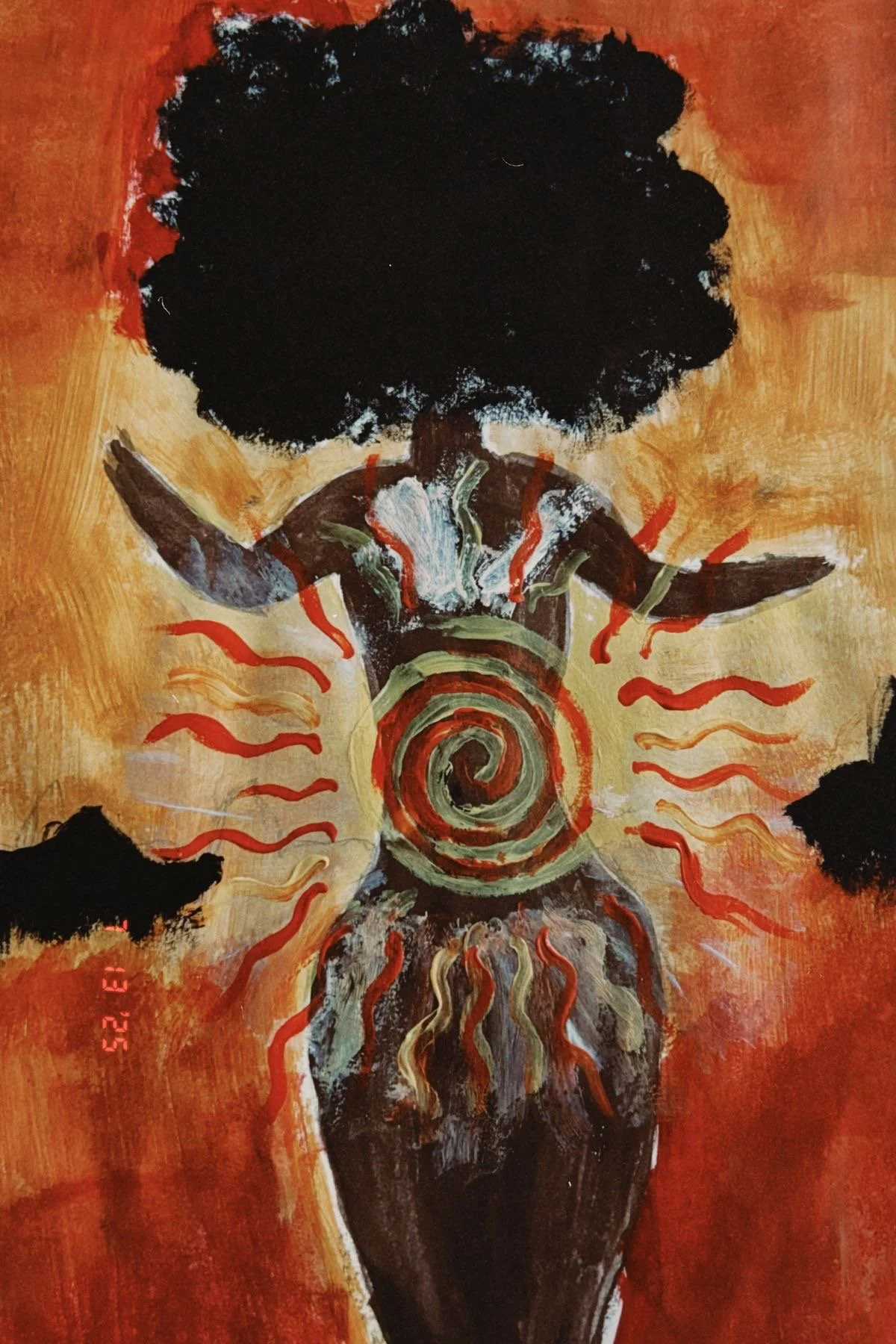
Your Internal Guidance Systems
Tonal Resonance: Tuning In
Begin by humming at a consistent neutral tone. Notice the vibration in your throat and chest Transition to a slightly higher pitch for one minute. Observe this shift in energy. Then, return to neutral before dropping into a lower, deeper hum. Clear your mind and notice the nuance of these frequencies. The neutral tone serves as your baseline Ask yourself a yes or no question. Instead of thinking of an answer, allow a hum to arise naturally. For many, a higher frequency resonates as “yes”, while a lower pitch signals “no.” The challenge lies in relinquishing cognitive control and allowing the body's resonance to emerge spontaneously.
Somatic Anchoring: Tapping
Begin by tapping your chest lightly while saying the word “Yes” out loud. Notice the physiological fluctuations that occur. Is there an expansion in the ribs? A warmth or openness in your body? Repeat this same process with the word “no.” Does this energy contract? Do you feel tight or dull anywhere specifically? How does your posture shift? By familiarizing yourself with these somatic signatures, you develop a more reliable internal compass.
Learned at Harlem Brain’s HCL Scholarship Program: https://www.harlembrain.com/scholarship
Personal Reflection : For me, “No” manifests as a heavy drop in the stomach and an energetic pull from the chest down towards the abdomen. A“Yes” feels like a more open and light feeling in the chest. There’s an energy that expands upward and flutters up towards my brain.
At first, this information can feel abstract and even bizarre, almost like you’re making it up. However, somatic trust is a skill that requires practice. Everyone’s internal language is unique. If you don’t feel a clear signal immediately, simply remain curious. With practice, you can transform these little pulses into a clear decisive dialogue with yourself.
~ Amerah