

Is Self-Care Inherently Selfish?
Is Self-Care Inherently Selfish?
Written by Staff Therapist Morgan McDaniel, LPC
When you think of self-care, what is the first thing that pops into your mind? Is it having your spouse handle bedtime with the kids so you can see a movie? Is it silencing your phone so that you can recharge after a demanding day? Or perhaps it is indulging in a special coffee treat for the second time in a week?
Many of us would probably instinctively attach a negative connotation of selfishness to these acts. But why? When you shift your perspective, it doesn’t have to be that way. When you shift your perspective, we can see that self-care is not really selfish at all—it is foundational.
Self-Care Is…
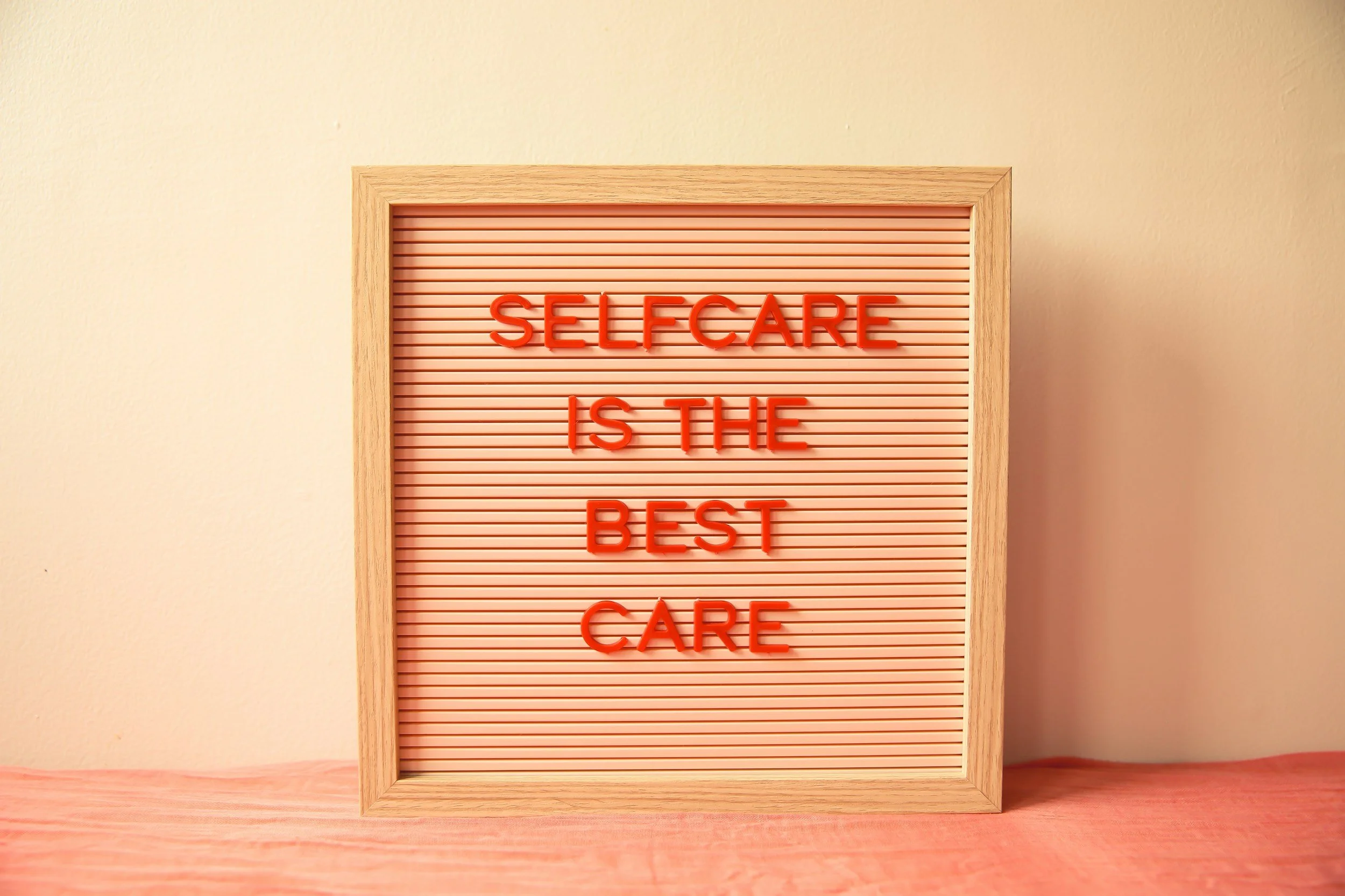
Wherever you may be in your healing journey, it’s imperative to understand that self-care is a service both to you and others. In my clinical work, I often observe clients who view self-care as something that is seen as a luxury, a self-indulgence, something not a priority, and definitely not something that is necessarily for our day-to-day functioning. This is particularly true for those who may struggle with codependent tendencies, or people pleasing tendencies as somewhere along the line of life, the message that their needs matter got lost. Even more clinically, in healing from trauma, grief, and adjustment, or just general stress in life, one must put themselves first in order to get back to baseline functioning.
Self-care is an act of self-love that radiates and extends to others. Think about this in the form of an analogy regarding the oxygen masks on the airplane. During the safety portion of the flight instructions, the flight attendant explains if there is low oxygen and low cabin pressure, the masks will fall. The flight attendant is also very specific in saying to safely secure your oxygen masks first before trying to attempt to help others. So how can we possibly begin to help another person (and in this case to breathe), when we first can’t help (breathe) ourselves? In order to help others, do we not have to secure ourselves first? When we help ourselves first, then we can have the capacity to help others the right way. We can’t pour from an empty cup. This clinically translates to resource depletion. To sustainably care for others, we must first ensure our own emotional, mental, and physical reserves are replenished.
Authentic Self Care
So, what does authentic self-care look like? It is deeply personal. Finding solace and peace and doing things that make you happy can all be self-care. Deep conditioning your hair, getting 7 hours of sleep consistently, disconnecting from the world and walking a small trail, or baking cookies just for the fun of it are just a few examples. Critically, however, self-care isn’t always aesthetically pleasing or comfortable. In that sense, it can look like cutting a toxic partner out of your life, articulating a firm “no” to excessive demands, or confronting a family member about hurtful behavior. While these specific examples do not look or sound good, self-care can be a guideline and a foundation of how to treat yourself and in extension, a guide and the foundation for others to understand how you protect your psychological space. Without such healthy practices, we can become vulnerable to being used, manipulated, and taken advantage of. Think about working extra hours without pay because you don’t want to upset your boss as an example. Where is the benefit of that? By engaging in consistent self-care, we directly mitigate symptoms of stress, burnout, emotional fatigue, resentment and helplessness. Essentially, it is a proactive strategy for maintaining mental health.
A Change in Perspective
Going back to that idea of perspective: for the people-pleasers among us, reframing is key. View self-care not as withdrawing from others, but as positioning yourself to engage more fully and authentically. You are not "canceling plans", you are honoring your capacity to ensure that when you are present, you are genuinely engaged, not simply going through the motions. Isn’t the goal to offer your best self to the people and causes you care about?
Ultimately, self-care means prioritizing your wellbeing, your happiness, your peace, and your health. While this may feel selfish, it is quite the opposite. In summarizing above, self-care is a service to ourselves and others, as well as self-love that radiates and extends to others. By ensuring our own stability, we cultivate the resilience, patience, and empathy required to support others effectively. Is that not an ultimate form of selflessness?
In this New Year, I encourage you to start adding things to your 2026 self-care checklist to start becoming your best and most authentic to you.